Maria Botan Maria Botan

The Erotic Art of Saying No: Why Clarity is a Radical Act of Care (The Four Play Edition)

Welcome back to the playground!

If you were with me at our last Four Play gathering in March, at KitKatClub, we explored the courage it takes to approach someone, look them in the eye, and ask for what you desire. We talked about how vulnerability and clarity can bridge the gap between two strangers on a crowded dance floor.

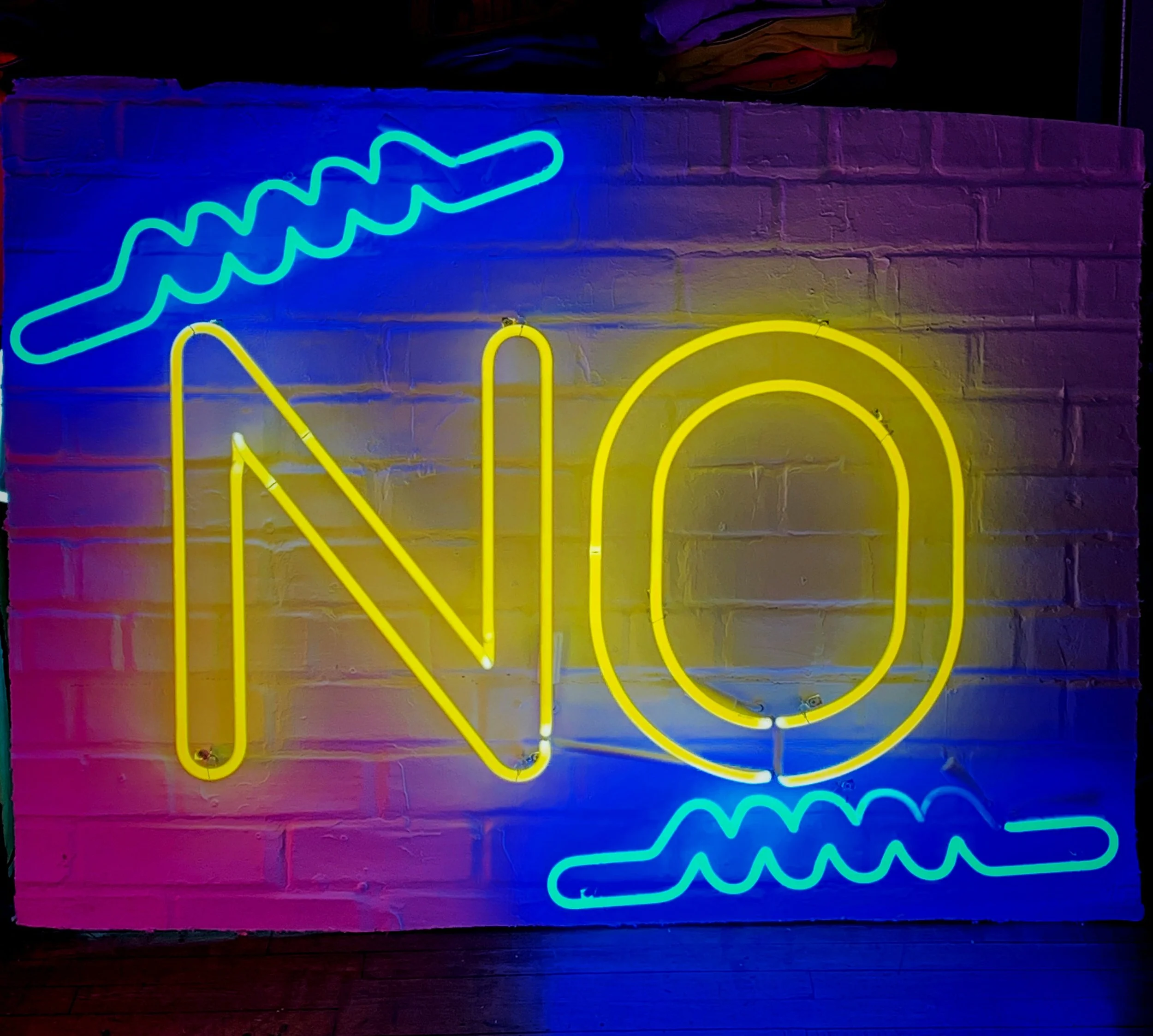
Well, for the April edition, we looked at another side of that beautiful, messy dance. We talked about the skill that actually makes all that freedom possible. It is the skill that protects our peace, our pleasure, and our community: the erotic art of saying "No."

In the heat of the moment, surrounded by pounding techno, breathtaking art, and the electric energy of beautiful people, our brains can sometimes panic and flip into survival mode. We want to be liked. We want to keep the vibe going. And so, we forget our own boundaries.

We need to change that. Because a culture of true liberation cannot exist without a culture of profound, uncompromising civility and kindness.

Why We Swallow Our "No"

Let’s be honest: how many times have you ever smiled and said "yes" when every fiber of your being wanted to say "no."

We all do it. And if you do, please be gentle with yourself. Finding it hard to say no is not a moral failing; it is a profoundly human response. We are pack animals. We crave inclusion. From the time we are children, we are programmed to believe that compliance is polite, and refusal is rude. Add the intoxicating swirl of a club, the fear of missing out, and the genuine desire not to hurt someone's feelings, and suddenly, setting a boundary feels like an emotional obstacle course.

When someone is kind to us, or gives us their attention, we feel a pull of reciprocity. We think we owe them something.

But here is the truth we need to embrace: False harmony doesn't protect anyone. When we say "yes" out of guilt or pressure, we disconnect from our own bodies, and we rob the other person of an authentic interaction.

The Mindset: A Boundary is an Act of Care

We need a radical reframing of what rejection actually means in our spaces. Saying no is not just a denial; it is a profound permission. It is permission for you to guard your sacred time, your body, and your joy.

I want you to take this mantra onto the dance floor with you: Saying no is not selfish. It is an act of care.

It is care for yourself: It protects your emotional well-being, prevents resentment, and makes room for the full, enthusiastic "yeses" that actually set your soul on fire.

It is care for the other person: Most people in our scene want to be ethical, respectful explorers. By giving them a clear "no," you relieve them of the exhausting anxiety of mind-reading. You save them from accidentally crossing a line they didn't know was there. You protect their integrity.

It is care for our community: Every time you deliver a clear, kind refusal, you normalize rejection. You prove that a boundary is just a boundary, not a personal attack. You help co-create a safer, more authentic playground for every single person in the room.

Trusting the Wisdom of Your Body

Before you can speak your truth, you have to feel it. In a high-pressure moment, your mind might race, trying to rationalize why you should just go along with it.

But your body always knows.

Start paying attention to your physical cues. When someone asks you for something you don't want, what happens inside you? Does your jaw tighten? Does your throat catch? Does your stomach drop or your posture freeze?

That tightness is your internal red flag. It is your body desperately trying to protect you. Trust it.

To help ground yourself when that feeling hits:

Normalize the pause: You do not owe anyone an instant, rapid-fire response. Take a breath. Let the silence hang for a second.

Anchor yourself: Rub your hands together, feel the floor beneath your boots, or place a hand on your chest. Bring yourself back into your physical form before you speak.

The Scripts: Giving Voice to Your Boundaries

Once you feel that "no" in your body, the next step is bringing it into the world. Different moments and different connections call for different kinds of energy, but the goal is always the same: honoring yourself. Keep these scripts in your back pocket, ready to pull out when you need them:

The Direct No: "No, thank you." It is clear, concise, and beautifully final. You do not need to explain, justify, or apologize. The word itself is a complete, respectful sentence.

The Soft No: "Thanks, but not tonight." It is kind, yet entirely firm. It acknowledges their courage in asking while fiercely protecting your own energy and current vibe.

The No-with-an-Offer: "Not that, but I'd love to just dance." This gracefully redirects the connection, but only use this if your soul is genuinely a "yes" to the alternative. Never offer a consolation prize out of guilt.

The Escalation: "I said no. Stop. I am getting staff." For those rare times your initial boundary is ignored. You have every right to take up space, raise your voice, and demand the respect and safety you deserve.

The Erotic Brain: The Grace of Changing Your Mind

We have been taught that "sticking to your word" is the ultimate virtue. But in erotic, sex-positive spaces, that rule can deeply hurt us. We need to be kind to ourselves about this: changing your mind is not only allowed, it is a sign of a healthy, intuitive relationship with your body.

Our arousal is like a car with an accelerator and brakes. Novelty, music, and a lingering touch press the gas. But sudden fatigue, a weird shift in the vibe, or an intrusive thought can instantly slam on the brakes. Those levers flip fast. Something can feel like magic one minute and completely wrong the next.

A yes is not permanent consent.

If your body sends you a stop signal mid-kiss, mid-dance, or mid-play, honor it. You can simply say, "Wait, stop," or "I changed my mind, I need a break."

And if you are the one receiving that rescind? This is where your true character shines. This is where we build our culture of grace.

You stop immediately. You step back. And you say, "Totally fine. Thank you for telling me. I'm here if you need anything." No guilt, no sighing, no negotiation. You preserve their dignity, and in doing so, you elevate your own.

From Skill to True Kindness

When you are first learning to set boundaries, simply getting the word "No" out of your mouth is a massive, beautiful victory. That is the skill. It might come out blunt, it might feel awkward, and you might overcompensate and sound a little too harsh. That is completely fine. Protecting your peace always comes first.

But as that skill becomes automatic, you gain the emotional bandwidth to add grace. You move from merely protecting yourself to actively nurturing the culture around you. You can soften your eyes, offer a genuine, "Thank you so much for asking, but not tonight," and ensure the other person walks away with their confidence intact.

We use the skill to survive, but we use kindness to thrive.

The Challenge: Be the Culture

We belong to each other out there. We are a pack. If you see someone struggling to hold a boundary, step in. A simple, "Do you need help?" or "Are you good here?" can change the entire trajectory of someone's night.

Next time you are out, I challenge you to flex this muscle. Do not fear the "no"—either giving it or receiving it. Embrace it as the ultimate tool of respect. Notice how much lighter, freer, and sexier your night feels when you stop people-pleasing and start authentically communicating.

Let's build a nightlife where honesty is the baseline, and kindness is the ultimate aphrodisiac. Be brave. Be incredibly kind. And remember: a boundary isn't a wall that keeps people out; it's the beautiful, illuminated path that shows them exactly how to love and respect you.

Read More
Maria Botan Maria Botan

Flirt Smart: Consent as a Sexy Skill (The Four Play Edition)

Welcome to the playground!


If you’re reading this, maybe you were with me at Four Play in KitKatClub, or maybe you’re just someone who knows that the scariest part of a night out isn't the dungeon, it’s walking up to someone hot and saying "Hello."


We need to talk about the "Atrophied Muscle."


After a decade of swipe-culture and online dating, our ability to flirt in the wild has weakened. We’ve forgotten how to do this face-to-face. Historically, humans met on the dance floor: from village festivals to Bridgerton ballrooms to the pool area at KitKat. But now? We get in our heads. We worry about being pushy. We worry about invading space.


So, we stare at our drinks instead.


We do this because we are afraid of awkwardness, rejection, and social judgment. We don’t want to be "that creep" who misread the vibe. And honestly? That fear comes from a good place: we want to be respectful.


But let’s flip the script for a second. What happens when someone approaches you?


In a culture that is rightfully hyper-aware of boundaries, we have become quick to label any unwanted attention as "creepy." But the truth is, most people aren't predators. They are just nervous humans who lack the right skills.


When someone walks up to you and says something clumsy, or stands a little too close, or uses a line that lands flat, they are usually terrified. They are overcompensating for their own shaking hands. They are trying to be brave in a loud, intimidating room.


So, if someone approaches you and the vibe isn't right, try to be kind.


You don't owe them a "Yes." You don't owe them your time. But you can give them a graceful "No." A cruel rejection can send someone back into their shell for years. A kind rejection: "I'm flattered, but I'm doing my own thing tonight". This shows you respect the courage it took for them to walk across that floor.


We are all learning how to be human again. Let's make the learning curve a little gentler for each other.


And here is the secret I shared at the workshop: Clarity is sexy. Consent isn't a legal contract you sign before kissing; it’s the hottest way to check if someone wants you as much as you want them.


Here is your toolkit to make asking easy, sexy, and clear.


1. The Mindset: "I’m OK, You’re OK"


When you see someone magnetic across the room and you freeze, it’s usually because your brain has started a war. On one side, there is desire. On the other, a barrage of intrusive thoughts: "What if I’m bothering them?" "What if I can’t find my words?" "What if they’re mean?"


To silence this war, we need to borrow a concept from Transactional Analysis called the OK Corral, but we need to apply it to the messy, beautiful reality of a nightclub.


Your new mantra is: "I’m OK, You’re OK."


This isn't just positive thinking; it is a profound shift in how we view strangers. It means entering every interaction with the fundamental belief: I am a worthy, respectful adult with good intentions. You are a worthy, respectful adult with your own complex reality.


Why is this perspective so powerful? Because it gives you five distinct superpowers on the dance floor:

  • It Creates Positive Energy

    When you approach someone believing they are "OK" (kind, decent, human), your body language softens. You aren't walking up to them seeking validation for your existence or fearing an attack. You are walking up to offer a connection between two equals. People can feel that lack of desperation, and it is magnetic.


  • It Empowers You to Act

    Fear paralyzes us because we think the stakes are life or death. But if "I'm OK" and "You're OK," the stakes get much lower. The worst that happens is two cool people realize they aren't a match right now. That’s it. This mindset gives you the permission to move your feet and say "Hello."


  • It Stops Escalation

    Sometimes, rejection isn't polite. Sometimes people are rude, drunk, or just having a bad night. If you believe "They are not OK" (i.e., they are a jerk), you might get defensive or angry. But if you hold onto "You're OK," you realize their rudeness is about their circumstances, not your worth. You don't need to fight back or prove them wrong. You can just walk away.


  • It Saves You from the Shame Spiral

    We have all been there. You get rejected, and you spend the next hour thinking, "I knew I wasn’t attractive," or "I shouldn't have worn this, I should have said that." The "I'm OK" mindset builds a shield around your self-esteem. A "No" becomes a neutral fact about timing or chemistry, not a verdict on your soul.


  • It Silences the Mental Replay

    Perhaps the biggest gift of all is peace of mind. Without this mindset, we spend hours (or days) replaying the interaction in our heads, analyzing every word we said. When you adopt "I'm OK, You're OK," there is nothing to analyze. You tried, it didn't work, and you are both still good people. You are free to enjoy the rest of your night without the baggage.


This is how we keep the dance floor human. We stop seeing people as targets to be acquired or judges to be feared, and start seeing them as fellow travelers who are just as complex, messy, and "OK" as we are.


2. Body Language: The Triangle of Trust


You've got your "I'm OK, You're OK" mantra firmly in mind. Now, let’s translate that into how you physically approach someone. Because if I march up to someone straight on, square my shoulders, and get right in their face, that’s not flirting; that’s a confrontation. And we've just discussed how much fear and misunderstanding that can generate, on both sides.


Now, a participant in the workshop asked a very insightful question: "Isn't learning specific body language a bit manipulative?" And it's a fair question, one that gets to the heart of authentic connection.


But here's the truth: most of us are fundamentally good humans. When we're genuinely interested in connecting in a respectful way, our bodies naturally want to exhibit these "open" signals. The problem is, when we're nervous, afraid of rejection, or trying too hard, that natural inclination gets suppressed. We tense up, we square off, we stare… because our anxiety overrides our authentic desire to connect kindly.


Knowing these cues isn't about being manipulative; it's about reclaiming your natural honesty. It allows you to consciously shed the tension and express the genuine, respectful interest you already feel. And, crucially, it helps you recognize that same (often clumsy) honesty in others, prompting you to respond with more consideration and kindness.


Your body should broadcast the same message of respect and openness as your mind. We use what I call the "Open Approach":

  • Eye Contact: Let it develop naturally. This isn't a gazing contest where you try to out-stare them. It's about mutual recognition. Let your gaze meet theirs, offer a genuine smile, and then naturally let your eyes drift slightly to the side or down before re-engaging. That moment of looking away? That vulnerability is real, and it communicates that you’re not aggressive. It gives them space to process and choose to return your gaze, making the connection feel organic, not forced.


  • ·The Angle: Do not stand directly in front of them like a soldier. Standing square-on can be perceived as aggressive or demanding, instantly putting someone on the defensive. Instead, position your body at a slight angle to them. This creates a more open, less confronting posture. It says, "I'm interested in connecting, but I'm not boxing you in."


  • The Tilt: Tilt your head slightly. This is a subtle yet powerful cue. It exposes your neck, which is a primal, vulnerable signal of trust. It softens your presence and signals curiosity rather than intensity. It invites engagement, rather than demanding it.


  • Distance: Even in a loud club, start at an arm’s length. This is fundamental respect for their personal space. Don't crowd them. If they can't hear you, don't automatically lean in closer. Instead, use gestures or a slight pause to see if they invite you closer, verbally or non-verbally. Once your initial message is delivered, maintain that respectful distance unless they actively close the gap. It demonstrates that you prioritize their comfort and control over their space.


This body language package isn't just about making you look good. It says: "I am interested, but I am not trapping you. I see you, and I respect your comfort." It's the physical embodiment of "I'm OK, You're OK," offering a safe and inviting space for connection to potentially blossom.


3. The Verbal Scripts: Bite-Sized & Bold


You approached. Your body language is speaking volumes of respect. Your "I'm OK, You're OK" mindset is firm. Now... words. What has worked for you before, what hasn't? The key is: Keep it short. Keep it honest. Vulnerability is your secret weapon. It cuts through the noise and creates a different kind of energy.


Here are some scripts to try. Remember, the more authentic the delivery is, the bigger the chances of success. Choose what feels natural to you.


Scripts for Opening the Conversation (The Initial Ask):

  • The Direct Appreciation: "Hi. I just saw you dancing and I love your energy. I’d love to get to know you."

    Why it works: Simple, genuine, and focuses on their essence rather than just their looks.


  • The Vibe Check: "You look like you're having the best time. Are you open to some company, or are you in your own zone right now?"

    Why it works: This is incredibly respectful. It gives them an easy, comfortable "out," showing you prioritize their space.


  • The Playful Ask: "I’m trying to be brave tonight and talk to the most interesting people I see. Can I buy you a drink/dance with you?"

    Why it works: Acknowledges your own vulnerability and gives a clear, low-stakes invitation.


  • The Shared Experience: "That track is insane. Mind if I dance nearby?" (If on the dance floor) or "This drink is great. What are you having?" (If at the bar)

    Why it works: Finds common ground and leads with an observation, not just a direct approach.


  • The Compliment with Curiosity: "I love your… (tattoo/outfit piece/hair color). It really caught my eye. What's the story behind it?"

    Why it works: Specific compliments feel more genuine and open a conversation rather than just asking for a yes/no.


Scripts for Re-Checking Consent (When the Connection Develops):


Remember, consent isn't a one-time ask; it's an ongoing conversation. As things heat up or become more intimate, check in.

  • For Physical Contact: "I'd love to… (hold your hand/touch your arm/put my arm around you). Is that okay?" (Be specific about the action.)

  • For Escalation: "I'm really enjoying this connection. I'd love to… (kiss you/go somewhere quieter). Are you open to that?"

  • ·The General Check-in: "Is this still feeling good for you?" or "Are we still good here?"


The Graceful Exit (The Most Important Script):


This is paramount. If they say no, look away, hesitate, or give any signal of discomfort, your response dictates the safety and respect of the interaction.


You say: "Totally cool. Have a great night!"


And then, this is key!, you physically turn away and leave. You reward their honesty with your respect. This builds a safe culture for everyone, where "no" is heard, respected, and not punished. You make it easy for them to be honest, and that's the ultimate act of consideration.


4. The KitKat Caveat: Negotiation Before Play


Now, a specific note for any kinky, sex-positive, or expressive space. You will see harnesses, collars, leather, latex, and nudity. You will encounter people in various states of dress (or undress) and expressing themselves in a multitude of ways.


And this leads to one of the most crucial lessons:


An outfit is not an invitation.

A collar is not a handle you can grab.


We never, ever, rely on assumptions. Just because someone is dressed submissively does not mean they submit to you. Just because someone is naked doesn't mean they want to be touched. These are forms of self-expression, identity, and personal aesthetic, not a declaration of availability or a blanket consent.


Especially in a club context, where there are so many external stimulants - music, lights, substances - do not rely on assumptions.


We negotiate play before we play. We start as equals. Even if someone is radiating "dominant" energy or wearing "submissive" attire, your approach begins from a place of mutual respect and explicit invitation. Your "I'm OK, You're OK" mindset is more important here than anywhere else. You are approaching another adult who deserves the clarity and respect you yourself expect.


And remember: Consent is fluid. It can change. Consent is an ongoing conversation, not a one-time transaction. If you’ve been dancing for 10 minutes, if you’ve moved to a different part of the club, if the music changes, or if you've been talking for a while and the dynamic is shifting, check in again.


Listen to their words, but also watch their body. If they tense up, pull back. If their smile fades, pull back. Moods can change, intrusive thoughts can appear, boundaries are not fixed, and while we may sometimes feel comfortable to expand them, we should also learn to recognize in our own bodies when something starts to feel uncomfortable - and here I mean emotional discomfort as well as actual physical discomfort. If you feel that shift in yourself, it's okay to withdraw.


This is the ultimate expression of respect and self-awareness in a truly liberated space.


The Challenge: Your Turn to Dance


The monster in our head is always bigger than the reality. Flirting is a skill, and like any skill, it takes practice. It might feel clumsy at first, a little awkward, and yes, you might even get rejected. But that is precisely how we grow.


We’ve talked about the "I'm OK, You're OK" mindset: that radical empathy for yourself and others. We’ve honed your body language for an "Open Approach," making your physical presence an invitation, not a confrontation. You have scripts for asking, for checking in, and for the all-important graceful exit. You understand that consent is a fluid, ongoing conversation, especially in the vibrant, expressive world of KitKat.


Now, it's time to put it all into practice.


Next time you are out, whether at Four Play, a local bar, or even a coffee shop, I challenge you to flex that muscle at least once. Don’t just try to get a "yes." Try to:


  • Approach with an open body, even if your heart is pounding.


  • Lead with genuine curiosity, not just a desire for a specific outcome.


  • Practice a graceful exit if the answer is "no," proving to yourself that you can handle it.


  • Check in for consent if the connection starts to deepen, normalizing that vital communication.


This isn't about scoring a number or a kiss. This is about retraining ourselves to be authentically human again. It's about empowering ourselves to initiate connections from a place of respect, and to contribute to a culture where everyone feels safer, more seen, and genuinely appreciated.


Be brave. Be kind—both to others, and especially to yourself. And remember: a clear "Yes" is the sexiest sound in the world, but the courage to ask, and the grace to accept any answer, is the most powerful move of all.


Go forth and connect, beautifully and authentically.

Read More